Ingredients in qoghundos: Understanding the truth behind this mysterious term

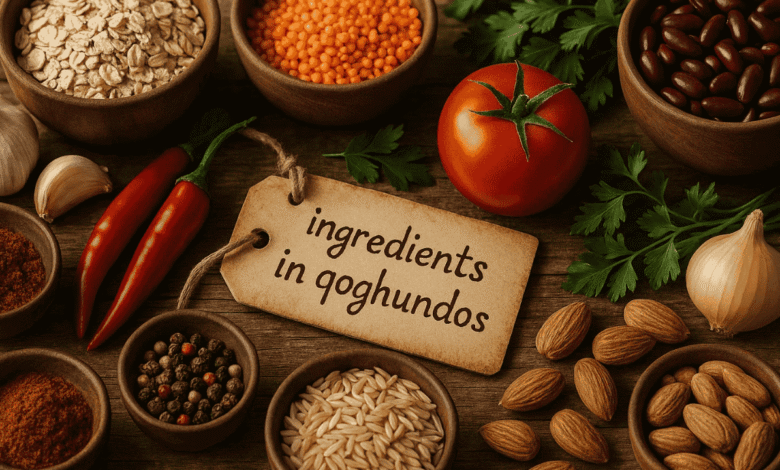
The phrase ingredients in qoghundos has been circulating across various online spaces, yet the information found about it is inconsistent, unclear, and often contradictory. Many people approach this topic expecting a traditional recipe, a cultural dish, or a nutritional blend, only to encounter multiple interpretations. This makes it important to explore what different sources claim, why the definitions are inconsistent, and what readers should know before trusting any claims about ingredients in qoghundos.
What people commonly describe when referring to ingredients in qoghundos
Different writers and websites describe ingredients in qoghundos in very different ways. However, some patterns appear repeatedly, even if they do not form a definitive or standardized recipe.
Grains and starch elements that some claims mention
A number of articles describe ingredients in qoghundos as including grains such as rice, bulgur, or wheat-based elements. These grains are mentioned as the base of what some sources call a traditional dish or a hearty blend. The descriptions vary, but the recurring idea is that grains help provide bulk and energy. These claims often portray qoghundos as a meal that resembles rice dishes, stews, or grain-based mixes.
Proteins and food components that appear in several descriptions
Another common theme involves proteins. Some descriptions say that qoghundos includes lamb, beef, poultry, or even plant-based proteins such as lentils, legumes, or nuts. In this version, ingredients in qoghundos are approached as a balanced meal that incorporates protein for nourishment, making it sound like a regional or cultural recipe intended to provide a full nutritional profile.
Vegetables and produce mentioned by various online sources
Some explanations include vegetables when discussing ingredients in qoghundos. These may include onions, peppers, carrots, or leafy greens. The idea is that vegetables add flavor, color, and nutrients. However, the challenge is that each source lists different combinations, and no consistent vegetable base appears across all descriptions. This inconsistency contributes further to the confusion surrounding ingredients in qoghundos.
Spices and seasonings that some sources claim are essential
A number of articles emphasize that spices form a major part of ingredients in qoghundos. These may include cumin, turmeric, garlic blends, herbs, or aromatic spice mixes. The argument is that qoghundos relies on spices for fragrance and flavor. Since spice blends vary widely by region and household, these claims make the dish seem adaptable, but also less clearly defined.
Claims suggesting optional or expanded ingredient lists
A few sources expand the idea further by adding nuts, fruits, legumes, or herbal components to ingredients in qoghundos. These descriptions often portray qoghundos as a nutritional blend rather than a meal. In some cases, qoghundos is described more like a supplement than a food dish, further complicating the definition.
Why the descriptions of ingredients in qoghundos are so inconsistent
Understanding the confusion requires looking at the broader issue. There is no strong evidence that qoghundos refers to a specific established dish, recipe, or supplement. Instead, different websites use the term with little agreement.
Lack of historical or cultural background
There is no documented cultural origin, traditional story, or verifiable background tied to ingredients in qoghundos. Without a cultural anchor, definitions tend to drift, leading various writers to create their own interpretations or assumptions.
Possible influence of trend-based or SEO-driven content
Some content online appears to be written to chase trends or keywords rather than to provide authentic information. This can result in articles repeating vague or unverified claims. As a result, descriptions of ingredients in qoghundos become even more fragmented, suggesting that the term may have been amplified by online marketing rather than by real culinary significance.
No regulatory or scientific verification
In cases where qoghundos is presented as a blend or supplement, none of the claims appear linked to verified testing, nutrition certification, or scientific research. The lack of documentation means readers should remain cautious when encountering bold or health-related claims connected to ingredients in qoghundos.
Conflicting interpretations from one source to another
Because the topic has no clear definition, one article may describe ingredients in qoghundos as a meal, another as a supplement, and another as a herbal mixture. This inconsistency makes it difficult for readers to trust any single explanation.
What readers should keep in mind when researching ingredients in qoghundos
Since the term is unclear, readers should approach claims about ingredients in qoghundos with careful consideration. Below are points that help maintain clarity and critical thinking.
Key points to consider
• The term lacks a clear and verifiable origin
• No standard recipe or ingredient list is recognized
• Different sources provide unrelated descriptions
• Some claims appear marketing-driven rather than factual
• Health or nutritional claims may not be supported by evidence
• Readers should look for consistency before trusting any explanation
• Ingredients in qoghundos may not refer to a real traditional dish
• Posts discussing it often contradict one another
• The topic may represent a trend rather than a culinary fact
• Further research is needed before making conclusions
How writers and readers can approach this topic responsibly
It is possible to discuss ingredients in qoghundos in a responsible and informative way by acknowledging the lack of clarity. Presenting the topic as emerging, uncertain, or culturally unverified helps avoid spreading misinformation. Writers can encourage readers to question sources, verify claims, and avoid assuming that qoghundos represents a widely known or historically rooted concept.
Conclusion
Ingredients in qoghundos is a topic that appears frequently online, but the information available is inconsistent and lacks reliable background. Because various sources present conflicting ingredient lists, ranging from grains and vegetables to herbs, proteins, and even supplement-like ingredients, it is clear that no standardized definition exists. Readers should approach this subject with caution and recognize that ingredients in qoghundos may represent an unclear or trend-driven online concept rather than an established recipe or traditional blend. Taking a careful and critical view helps prevent misunderstanding and encourages more thoughtful exploration of similar topics.
FAQs
- What are ingredients in qoghundos generally described as?
They are described differently by many sources, often including grains, vegetables, proteins, or spices, but with no consistent recipe. - Is ingredients in qoghundos a real traditional dish?
There is no verified cultural or historical documentation confirming it as a traditional dish. - Why do descriptions of ingredients in qoghundos vary so much?
Different websites provide conflicting information, likely due to speculation, assumptions, or SEO-driven content. - Are health claims about ingredients in qoghundos reliable?
Most claims are unverified and lack scientific or regulatory support. - How should readers interpret information about ingredients in qoghundos?
Readers should remain cautious, verify claims across multiple sources, and understand that the topic lacks clear definition.