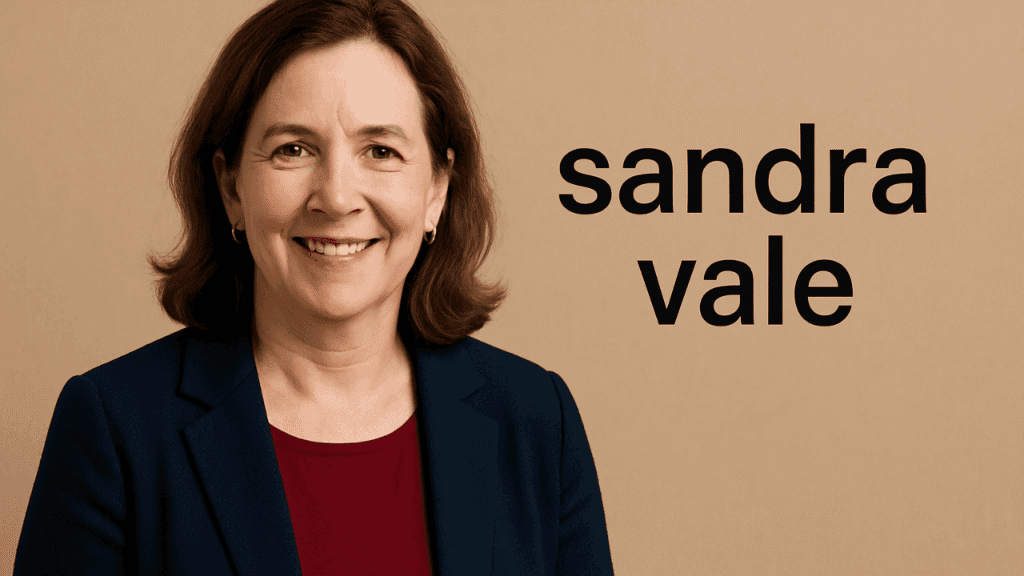

Sandra Vale combines lived experience, clinical research and public-health leadership to shape how communities understand and prevent allergic disease. Her career moves from nutrition and food science into applied research and health systems innovation, and she now leads efforts to translate evidence into national policy and practical programs. This article explores her background, key contributions, practical insights from her work, and what her approach means for families, clinicians and policy makers.
Background and professional journey
sandra vale trained in nutrition and food science and later completed doctoral research focused on food allergy prevention. Her academic foundation gave her the skills to investigate how early feeding practices, clinical pathways and education can reduce the burden of allergic disease. Over the years she progressed from research roles into leadership positions, and now occupies a prominent role guiding national allergy strategy and program development.
sandra vale’s personal experience with allergy, including being a parent of someone with severe allergic disease and living with adult onset exercise-induced wheat anaphylaxis, gives her an often-cited practical perspective. That lived perspective informs her emphasis on making policy and clinical guidance genuinely usable for families and primary care teams.
Contributions to allergy prevention and policy
sandra vale has been closely involved in developing evidence-based recommendations for infant feeding and allergy risk reduction. Her work supports the idea that early, informed introduction of common allergenic foods — combined with clear, consistent messaging for parents and carers — can form part of a population approach to lowering new cases of food allergy.
Beyond infant feeding, sandra vale advocates for shared care and integrated pathways that connect specialists, general practitioners, nurses and allied health professionals. Her research into shared care models for conditions such as paediatric eczema highlights how coordination across services improves outcomes and reduces duplication.
Research highlights and themes
Key research themes in sandra vale’s portfolio include:
- infant feeding and primary prevention of food allergy;
- design and evaluation of shared care models for skin and allergic conditions;
- development of practical care pathways for anaphylaxis and severe allergy management;
- education and capacity building for health professionals and families.
These themes reflect both clinical questions and health system design, which is why her work is relevant to clinicians who need practical tools and to policy makers seeking scalable solutions.
Why shared care matters for families and clinicians
Shared care means distributing responsibility and expertise across the health system so that children and adults receive timely, appropriate care where they are already seeking help — often in primary care or community settings. sandra vale’s work shows that shared care can:
- reduce waiting times for specialist input;
- keep more routine care within community services, freeing specialists for complex cases;
- improve self-management and family confidence through better education and support.
Practical outcomes of shared care include clearer referral pathways, standardized treatment plans, and targeted training for nurses and primary care clinicians.
Practical guidance derived from her work
Families, clinicians and service managers can draw the following practical steps from sandra vale’s research and leadership:
- Introduce common allergenic foods to infants following current, evidence-based schedules while discussing any family history of allergy with a clinician.
- Build simple, written care plans for children with eczema or food allergy that outline responsibilities for parents, GPs and specialists.
- Train practice nurses and allied health staff in basic allergy recognition and emergency action, including anaphylaxis management.
- Use shared care agreements to make sure follow-up is consistent and documentation is clear.
- Focus on person-centred communication: listen to families’ experiences and tailor education to their context.
These steps are intended to make guidelines practical and reduce the gap between what research recommends and what families can implement.
Leadership and system change
sandra vale’s leadership emphasizes system transformation rather than isolated program delivery. That means:
- developing national strategies that provide coherent goals and measurable outcomes;
- aligning funding, workforce development and education so that guidelines are implemented in routine practice;
- encouraging collaboration across government, non-government organisations and clinical networks.
Her approach is pragmatic: policy should be designed so that it can be implemented by the people who actually deliver care.
Human stories and the power of lived experience
One of the elements that makes sandra vale’s voice persuasive is the combination of rigorous evidence and lived experience. Personal stories about managing severe allergy or navigating health services bring urgency to technical discussions and remind stakeholders that policy affects real families. This human dimension strengthens advocacy for practical supports such as training, school policies and community education.
Challenges and the road ahead
While progress has been made, sandra vale points to persistent challenges:
- uneven access to allergy services in rural or under-resourced areas;
- inconsistent messaging that confuses parents and carers;
- workforce pressures that make it hard to adopt new models of shared care rapidly.
Addressing those gaps requires ongoing investment in training, clearer national standards and local adaptation so that solutions fit the community in which they are used.
Quick reference: actions for different audiences
For busy readers, here are concise action points inspired by sandra vale’s work.
For parents and carers:
- keep a written allergy and action plan;
- ask your clinician about evidence-based infant feeding guidance if relevant;
- ensure school and childcare settings have clear emergency plans.
For clinicians:
- adopt simple shared care templates to improve continuity;
- prioritize rapid education on anaphylaxis management for practice teams.
For health managers and policy makers:
- support scalable training programs and monitor implementation;
- measure outcomes such as reduced emergency presentations and improved adherence to care plans.
Conclusion
sandra vale represents the blend of scientific rigour, lived experience, and practical leadership needed to move allergy prevention from research into everyday practice. Her focus on shared care, clear guidance for families, and system-level planning offers a roadmap for reducing the burden of allergic disease. For parents, clinicians and policy makers, the key takeaway is that small, coordinated changes — better education, clear care plans and integrated pathways — can produce meaningful improvements in safety and quality of life.
Frequently Asked Questions
- Who is sandra vale and what is her area of work?
sandra vale is a public-health professional and researcher whose work focuses on food allergy prevention, shared care models for eczema and allergic disease, and translating evidence into national policy and practical programs. - What practical advice does sandra vale offer to parents about infant feeding?
Her work supports evidence-based early introduction of common allergenic foods under clinical guidance when appropriate, paired with clear, consistent information for families to reduce confusion and improve uptake. - How do shared care models improve outcomes according to sandra vale’s research?
Shared care distributes responsibilities across primary care, nursing and specialist services, reducing wait times, improving follow-up and increasing families’ confidence in managing conditions like eczema and food allergy. - What are the main challenges sandra vale identifies in implementing allergy prevention at scale?
Key challenges include inequitable service access, inconsistent public messaging, and workforce constraints that limit rapid adoption of new care models. - How can health services act on sandra vale’s recommendations today?
Health services can prioritize simple shared care agreements, train community clinicians in allergy recognition and emergency response, and create measurable targets to track improvements in care continuity and safety.