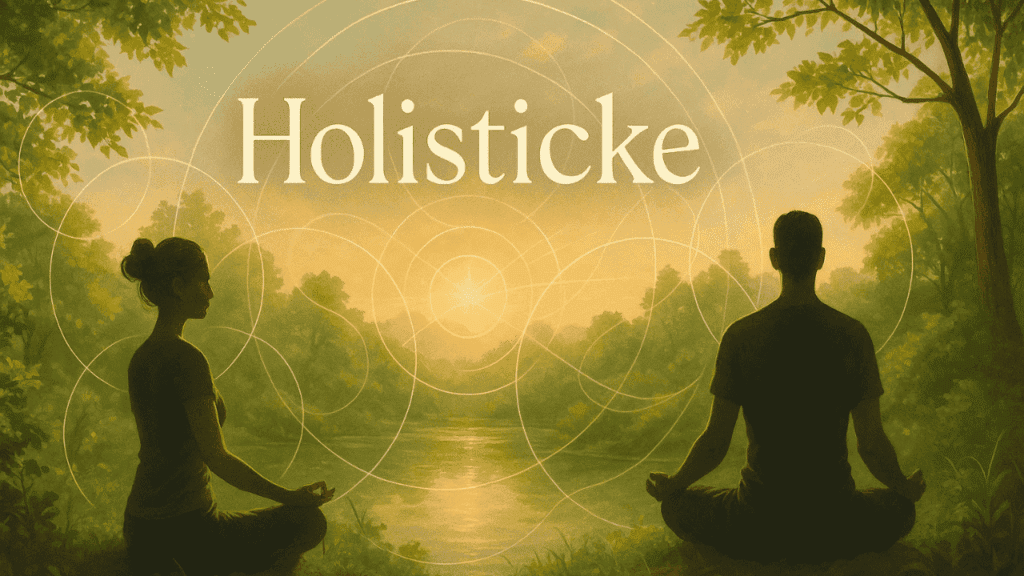

The term holisticke represents the idea of seeing and understanding things as a complete system rather than focusing on individual parts. It is derived from the word holistic, which has its roots in the Greek word “holos,” meaning “whole.” The concept behind holisticke emphasizes that every part of a system is interconnected and must be understood in relation to the whole. This principle is applied across different fields such as health, education, psychology, ecology, and even business management.
In today’s fast-paced world, people are increasingly turning toward holisticke approaches to find balance and harmony in their personal and professional lives. Instead of treating problems in isolation, holisticke thinking helps in identifying underlying causes and understanding how various elements influence one another.
1. The Philosophy Behind Holisticke
Holisticke is not just a method; it is a philosophy that suggests everything in the universe is connected. It goes beyond surface-level analysis and focuses on how different parts of a system work together. The origin of this philosophy dates back to the 1920s when Jan Christian Smuts introduced the concept of holism in his book “Holism and Evolution.”
According to this philosophy, a human being, an organization, or even an ecosystem cannot be understood merely by studying its individual components. Each part gains its meaning and purpose only through its connection with the whole. Holisticke, therefore, promotes a balanced, integrated way of thinking that values relationships, connections, and unity.
2. Applications Of Holisticke In Daily Life
The practical use of holisticke thinking can be seen in various areas of modern life. People are now embracing this mindset in multiple disciplines to achieve better outcomes and deeper understanding.
Health And Wellness
In healthcare, holisticke emphasizes treating the person as a whole — mind, body, and spirit — rather than just focusing on physical symptoms. Doctors and wellness practitioners who follow a holisticke approach often combine nutrition, lifestyle changes, mental health support, and environmental awareness in their treatment plans. This not only helps in curing illnesses but also in maintaining long-term wellness.
Education And Learning
In the education sector, holisticke promotes developing students emotionally, socially, intellectually, and spiritually. Holistic education systems aim to create balanced individuals who are capable of critical thinking, empathy, and creativity. Instead of focusing only on academic performance, this approach nurtures personal growth and life skills.
Business And Management
Many companies today are adopting holisticke business models that integrate every department and process into one unified strategy. A holisticke business approach ensures that marketing, operations, finance, and human resources work together toward common goals. This leads to better efficiency, employee satisfaction, and long-term success.
Environmental Awareness
Holisticke ideas also extend to environmental sustainability. The earth is seen as one interconnected system where all living things depend on one another. By applying holisticke principles, people can understand the impact of their actions on the environment and take steps toward sustainable living.
3. Benefits Of Adopting A Holisticke Approach
Applying holisticke thinking in any field brings a wide range of benefits. It promotes harmony, long-term results, and overall well-being. Some of the main advantages include:
- It helps in identifying root causes instead of just treating visible symptoms.
- Encourages balance between physical, mental, emotional, and social aspects.
- Promotes deeper understanding through connection and interaction.
- Leads to sustainable and practical solutions.
- Builds awareness of how one’s actions affect others and the larger system.
- Enhances creativity and problem-solving through system-wide thinking.
Holisticke encourages people and organizations to look beyond immediate gains and short-term fixes. By seeing the bigger picture, one can create more meaningful, lasting improvements.
4. Challenges In Practicing Holisticke
While holisticke approaches bring many benefits, they are not without challenges. One of the main difficulties lies in their complexity. Since holisticke focuses on the whole system, it often requires more time, effort, and resources to understand how each part interacts.
In addition, some critics argue that holisticke concepts can be too broad or vague. Without clear boundaries, it becomes hard to measure success or prove effectiveness scientifically. In the medical field, for example, not all holistic treatments are backed by evidence, which sometimes leads to misunderstanding or misuse.
Despite these challenges, when used thoughtfully and with balance, holisticke remains a valuable way of approaching problems and creating solutions that respect both individuals and the larger system they belong to.
5. How To Integrate Holisticke Thinking In Everyday Life
Adopting holisticke thinking does not require drastic changes. It starts with awareness and simple adjustments in perspective. Here are a few practical ways to apply it in everyday life:
- Practice mindfulness to stay connected with your thoughts and actions.
- Maintain a healthy balance between work, rest, and recreation.
- Build meaningful relationships based on empathy and understanding.
- Make lifestyle choices that are environmentally responsible.
- Look for long-term benefits instead of short-term results.
- Continuously learn how your actions influence the systems around you.
Through these steps, individuals can slowly align their lives with holisticke principles and create a more peaceful, purposeful existence.
6. The Future Of Holisticke In A Modern World
As societies continue to evolve, holisticke thinking is becoming increasingly relevant. Global challenges such as climate change, mental health issues, and social inequality require integrated solutions that address all dimensions of human life. Holisticke provides a framework that allows people to think beyond divisions and create unity in diversity.
In the future, education systems may rely more on holisticke approaches to develop well-rounded citizens. Businesses may adopt holisticke leadership that focuses on empathy, sustainability, and long-term vision. Health practices may continue blending science with holistic care to provide more balanced treatment.
The growing interest in mindfulness, wellness retreats, and conscious living shows that people are gradually embracing holisticke values in their daily lives.
7. Common Misconceptions About Holisticke
One common misunderstanding about holisticke is that it rejects modern science or logic. In reality, it complements scientific methods by adding emotional, social, and environmental awareness to analytical reasoning. Another misconception is that holisticke is only related to spirituality. While it often includes spiritual dimensions, it also applies to education, management, and environmental science.
By understanding holisticke correctly, people can appreciate its true meaning — the art of seeing everything as part of a larger whole.
8. Conclusion
Holisticke represents a timeless principle that encourages balance, connection, and understanding. It teaches that no system can exist in isolation and that every element affects the rest. From health to business, from personal growth to planetary well-being, holisticke thinking provides the foundation for sustainable progress.
Incorporating holisticke into modern life allows individuals and organizations to move beyond fragmented approaches and work toward harmony and wholeness. As awareness continues to grow, holisticke is set to play an essential role in shaping a more conscious, balanced, and interconnected world.
FAQs About Holisticke
Q1. What does the term holisticke mean?
Holisticke refers to an approach or way of thinking that focuses on the whole system rather than just individual parts. It emphasizes the connection between mind, body, environment, and emotions in achieving overall balance and harmony.
Q2. How is holisticke applied in daily life?
Holisticke can be applied by adopting healthy lifestyle habits, practicing mindfulness, maintaining emotional balance, and being aware of how personal actions affect others and the environment.
Q3. What are the benefits of a holisticke approach?
The main benefits of a holisticke approach include improved well-being, better relationships, long-term health, balanced decision-making, and a deeper understanding of interconnected systems.
Q4. Is holisticke related only to health and wellness?
No, holisticke applies to various fields such as education, business, ecology, and psychology. It promotes comprehensive development and system-wide harmony in all areas of life.
Q5. What challenges come with practicing holisticke?
Holisticke can be challenging because it requires more time and effort to understand complex relationships within a system. It also demands consistent awareness and balance to avoid focusing on isolated factors.