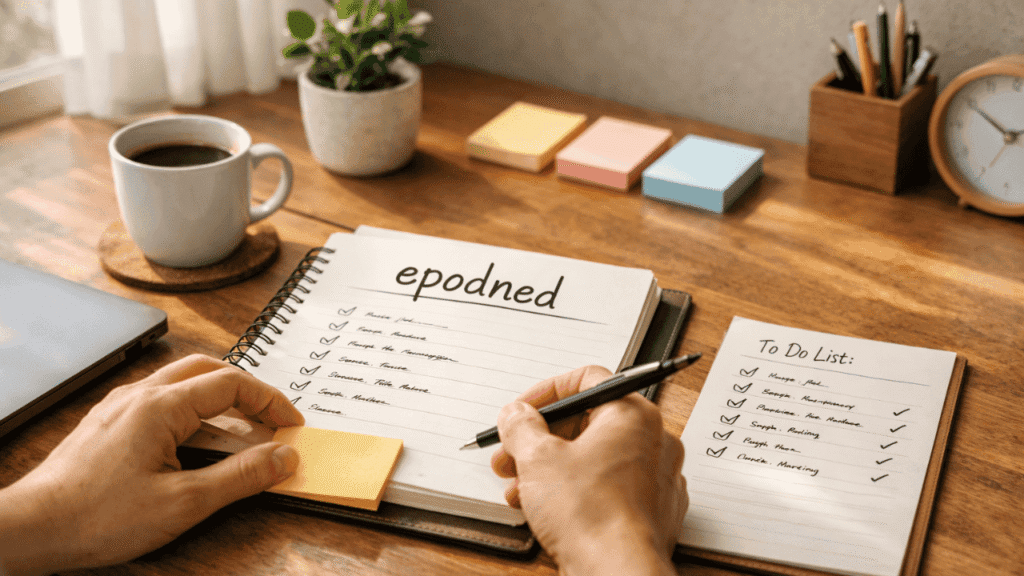

You may have come across the word epodned while browsing blogs, scrolling through forums, or searching for new productivity ideas. At first glance, it looks like a typo or a random string of letters. But the more you look, the more it shows up in discussions about digital work, efficiency, and modern workflows. That repeated appearance is what makes it worth paying attention to. Whether it’s a structured method, a fresh label for smarter work habits, or simply a term people use to describe streamlined systems, epodned has started to carve out a small but noticeable space online.
What epodned actually means in current usage
Right now, epodned doesn’t have a dictionary definition. You won’t find it in textbooks or official glossaries. Instead, it lives in blog posts, small business sites, and casual conversations. That usually means one thing: it’s an emerging term that people are shaping as they use it.
In most contexts, epodned is described as a way to organize digital life and work more efficiently. Think less clutter, fewer distractions, and smoother systems. Rather than being a single app or tool, it reads more like a mindset or framework.
Writers who talk about epodned often connect it with:
- task simplification
- smarter workflows
- remote and flexible work setups
- better use of digital tools
- reduced mental overload
So instead of asking “what product is epodned,” it makes more sense to ask “what approach does epodned represent.”
How epodned connects to productivity and digital efficiency
The strongest theme tied to epodned is productivity. Not the hustle culture kind where you just work longer hours, but the practical kind where you remove friction from your day.
Picture a typical workday. Tabs open everywhere. Notifications popping up. Tasks half finished. Meetings stacked back to back. Most people aren’t lazy; they’re overwhelmed by poor systems. This is the gap epodned tries to address.
When people describe epodned as a productivity framework, they usually mean:
- setting up clear processes for recurring tasks
- grouping tools instead of juggling ten separate apps
- automating repetitive actions
- creating a clean digital environment
- focusing on outcomes rather than busywork
In that sense, epodned acts like a label for structured, intentional work. It’s less about doing more and more about doing what matters with less effort.
Why the word epodned feels confusing to many readers
Here’s the honest part: the word itself doesn’t help. Epodned sounds abstract and unfamiliar. Without context, it looks like a misspelling. That’s why many people search for it just to figure out what they’re looking at.
This confusion has actually fueled interest. When a strange term pops up often enough, curiosity kicks in. People ask:
Is this slang?
Is it an acronym?
Is it a brand name?
In practice, epodned seems to function as a flexible label. Some use it seriously as a method. Others treat it casually as shorthand for “organized digital workflow.” A few even encounter it in chats or forums without a clear explanation.
That mix of meanings makes epodned feel mysterious, but it also gives writers and creators room to define it in a practical way.
Epodned as a modern work system rather than a single tool
One mistake people make is assuming epodned must be software. It’s not. It doesn’t refer to a specific platform you can download.
A better way to think about epodned is as a system made up of habits and choices.
For example, someone applying epodned principles might:
- use one task manager instead of three
- keep a single calendar for both work and personal life
- automate invoices or reports
- set clear time blocks for focused work
- limit notifications to only what matters
None of these steps are revolutionary on their own. The value comes from putting them together into a consistent structure. That structure is what many people are calling epodned.
It’s basically digital housekeeping with a strategy behind it.
How epodned fits remote and hybrid work
Remote work has changed how people manage their time. Without office boundaries, everything blends together. Work spills into evenings. Personal tasks interrupt the day. It’s easy to feel busy but unproductive.
This is where epodned makes practical sense.
A remote worker using an epodned-style setup might:
- create clear start and stop times
- build repeatable daily routines
- centralize communication channels
- track priorities instead of reacting to messages
- design a workspace that reduces distractions
The goal is simple: make work predictable and manageable. When systems are clear, stress drops. You spend less time deciding what to do next and more time actually doing it.
That’s why epodned often shows up in conversations about flexible work environments. It matches the needs of people who don’t have a traditional office structure guiding their day.
Comparing epodned with other productivity methods
To understand epodned better, it helps to compare it with well-known systems.
For example:
- Getting Things Done focuses on capturing and organizing tasks
- Pomodoro focuses on timed focus sessions
- Agile focuses on iterative progress and quick feedback
Epodned feels broader. It doesn’t dictate one technique. Instead, it encourages building a clean, efficient ecosystem using whatever tools work best for you.
You might borrow time blocking from one method, automation from another, and minimalism from somewhere else. Epodned becomes the umbrella that ties them together.
In short, it’s less rulebook and more philosophy.
Practical ways to apply epodned in daily life
If you want to write about epodned in a useful way, readers will expect actionable steps. Theory is nice, but real changes matter more.
Here are grounded ways someone could apply epodned right away:
- Audit your digital tools and remove anything you don’t use weekly
- Consolidate notes into one system
- Set up templates for repetitive emails or reports
- Plan tomorrow’s top three tasks the night before
- Schedule focused work blocks without interruptions
- Review your workflow every month and cut unnecessary steps
None of this requires fancy software. It’s about clarity and simplicity. That’s the heart of epodned.
When people experience fewer distractions and faster task completion, they naturally associate that improvement with the system they followed.
Why epodned keeps appearing online
New words spread for two reasons: they’re useful or they’re intriguing. Epodned checks both boxes.
It’s useful because it gives people a name for something they’re already trying to do: work smarter with digital tools. It’s intriguing because it doesn’t have a fixed definition yet.
That combination encourages blog posts, discussions, and searches. Content creators start explaining it in their own way. Readers look it up. The cycle continues.
Over time, epodned may either settle into a clear meaning or fade out. Right now, it’s still in the growth phase, which makes it perfect for informative content and early adoption.
Writing about epodned for a blog audience
If you’re building an article around epodned, keep it practical. Readers don’t want abstract theory. They want help managing their time and tools.
Focus on:
- real-life examples
- simple workflows
- step-by-step improvements
- relatable problems like burnout and digital clutter
Treat epodned as a solution to everyday chaos rather than a trendy buzzword. That approach feels honest and useful.
When you ground the concept in daily behavior, the term epodned starts to feel less strange and more actionable.
Conclusion
Epodned isn’t a product, an app, or a strict method. It’s closer to a mindset about working cleanly and efficiently in a digital world. At its core, epodned represents fewer distractions, smarter systems, and intentional workflows. The term may still be evolving, but the idea behind it is clear: simplify how you work so you can focus on what truly matters. If you adopt even a few epodned principles, you’ll likely notice less stress and better results without adding extra hours to your day.
FAQs
- What does epodned mean exactly?
Epodned is an emerging term often used to describe a structured, efficient approach to managing digital work and productivity systems. - Is epodned a software or app?
No. Epodned is not a specific tool. It’s a framework or mindset that can include different tools and habits. - How can I start using epodned principles?
Begin by simplifying your tools, automating repetitive tasks, and creating clear daily workflows. - Why is epodned becoming popular online?
People are searching for better ways to handle digital overload, and epodned offers a simple concept tied to efficiency and clarity. - Does epodned replace other productivity methods?
Not necessarily. It can complement methods like time blocking or task management systems by bringing them together into one organized structure.